Spotlight On: Dylan Thomas Centre & Exhibition
Preserving, Celebrating and Inspiring Literary Talent
The Dylan Thomas Centre is a landmark cultural building in the heart of Swansea. Established in 1995 as Tŷ Llên (“House of Literature”) and officially opened by former U.S. President Jimmy Carter, it was created to give writing, spoken word and literary culture a permanent public presence in the city. The Centre anchors Swansea’s relationship with one of Wales’ most internationally recognised writers and provides a visible focal point for literary heritage within the city centre.
Since its opening, the Centre has played an important role in shaping how Dylan Thomas’s life and work are presented and understood, both locally and internationally. It has welcomed visitors, researchers, broadcasters and literary audiences from across the world, reinforcing Swansea’s position as a city with a distinctive literary identity and a strong connection between place, culture and creativity.
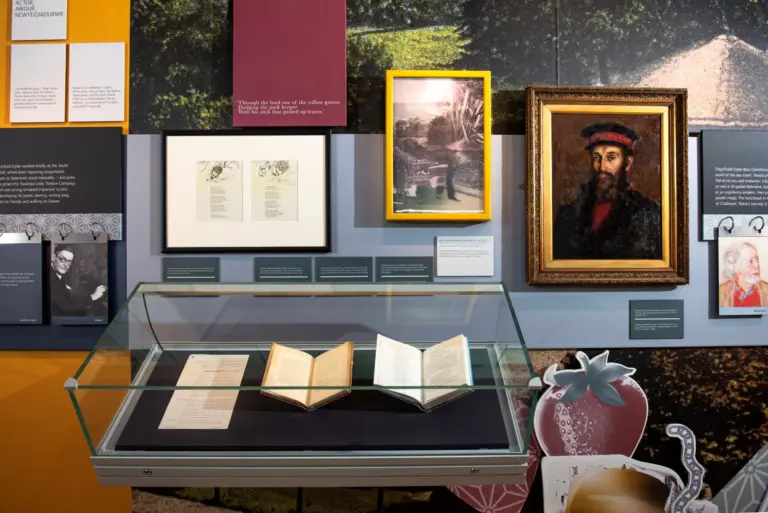
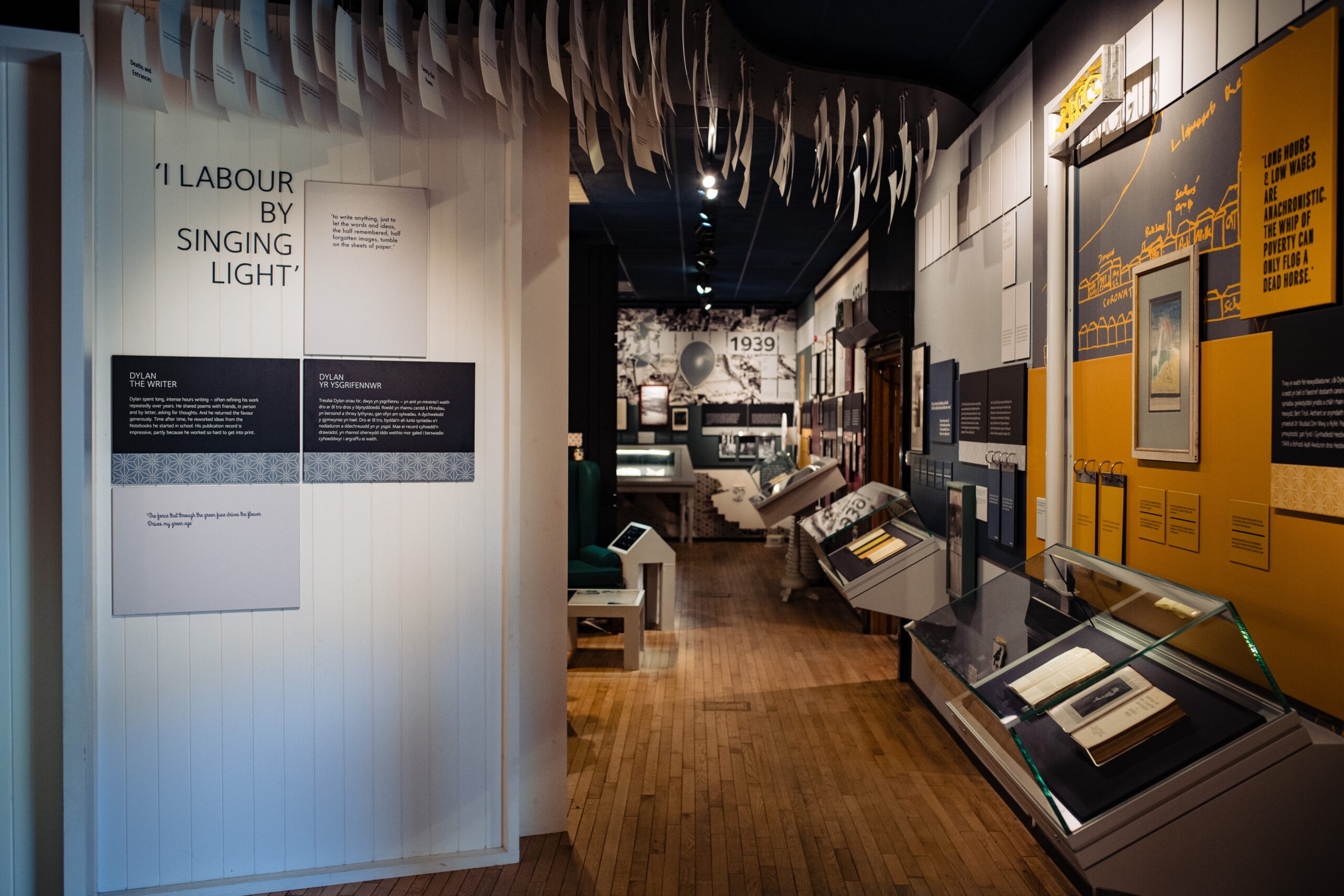
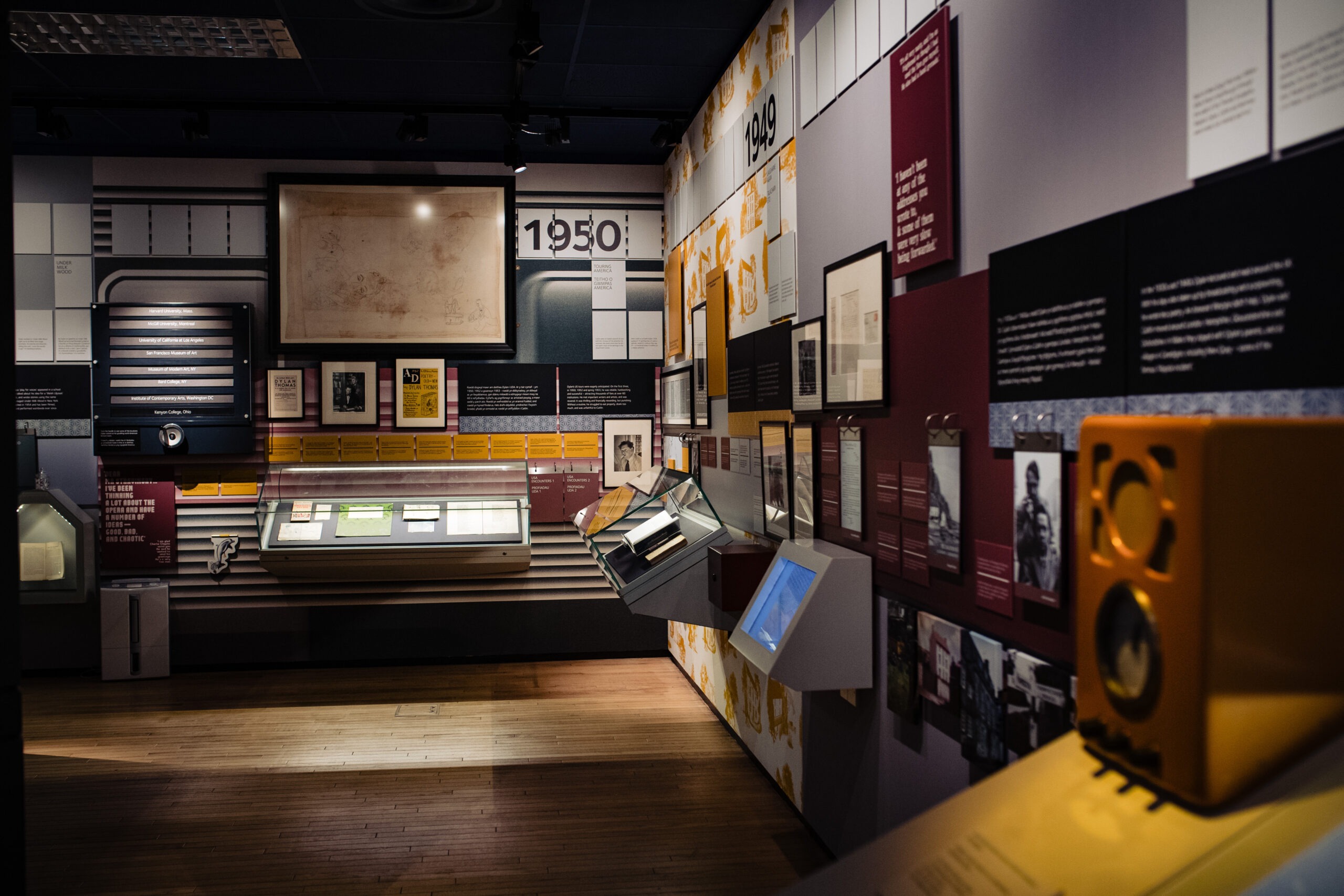
At the heart of the Centre is the Dylan Thomas Exhibition, which delivers the public-facing cultural programme. The Exhibition is where the Centre’s purpose is realised through collections, interpretation, learning and creative engagement, transforming literary heritage into an active and accessible experience.
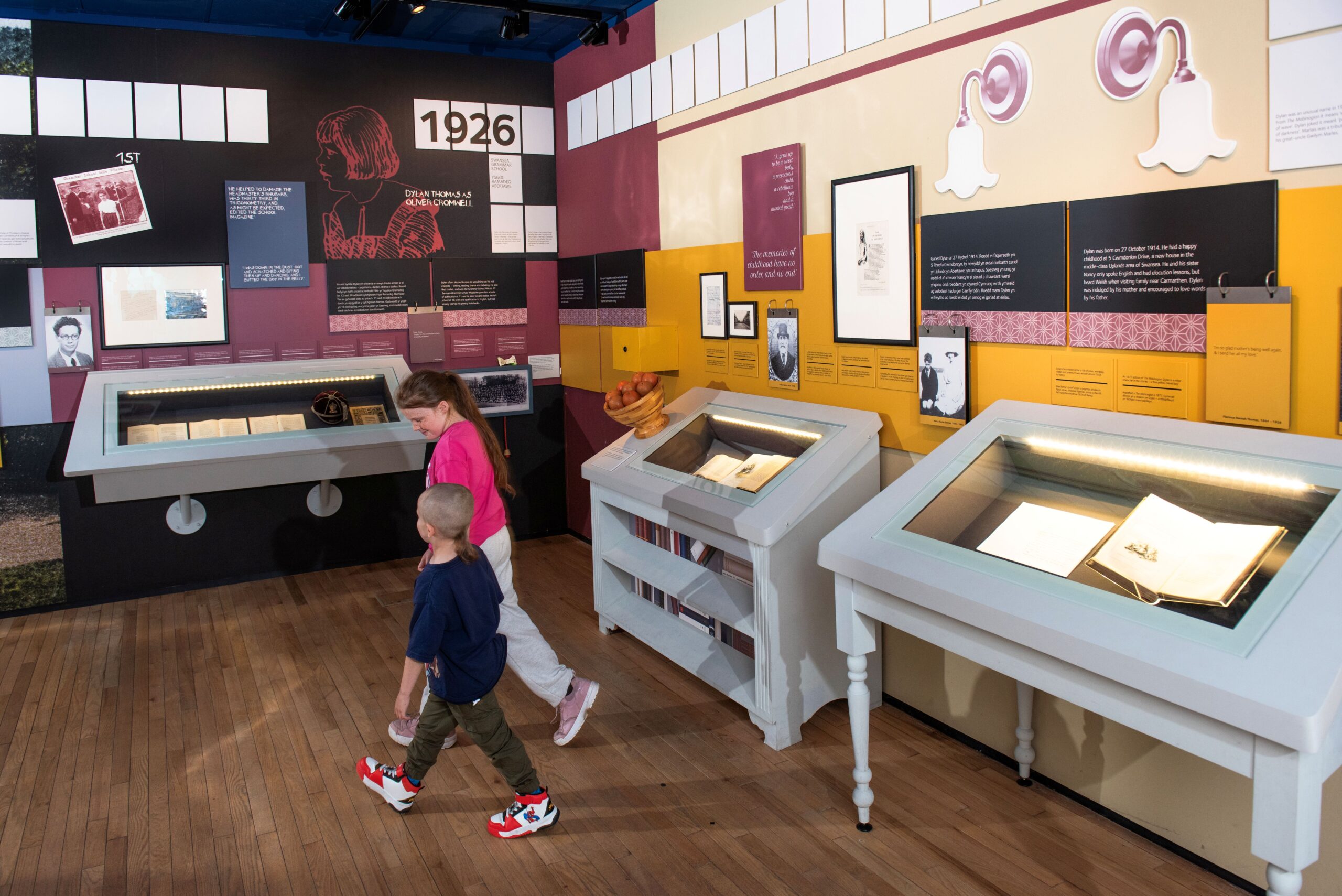
A major development came with the opening of Love the Words on 27 October 2014, marking the centenary of Dylan Thomas’s birth. Supported by Heritage Lottery Fund and Swansea Council funding, the Exhibition was designed as an interactive, family-friendly environment rather than a static display. Alongside permanent interpretation, it includes a learning space and temporary exhibition area, allowing the programme to remain flexible, responsive and contemporary.
The Exhibition’s collections provide depth and authority. Objects, recordings, photographs, manuscripts, letters and memorabilia place Dylan Thomas not simply as a literary icon, but as a working writer shaped by performance, publication and collaboration. Handwritten drafts, notebooks and correspondence sit alongside key works such as Under Milk Wood and A Child’s Christmas in Wales, making the creative process visible and tangible.
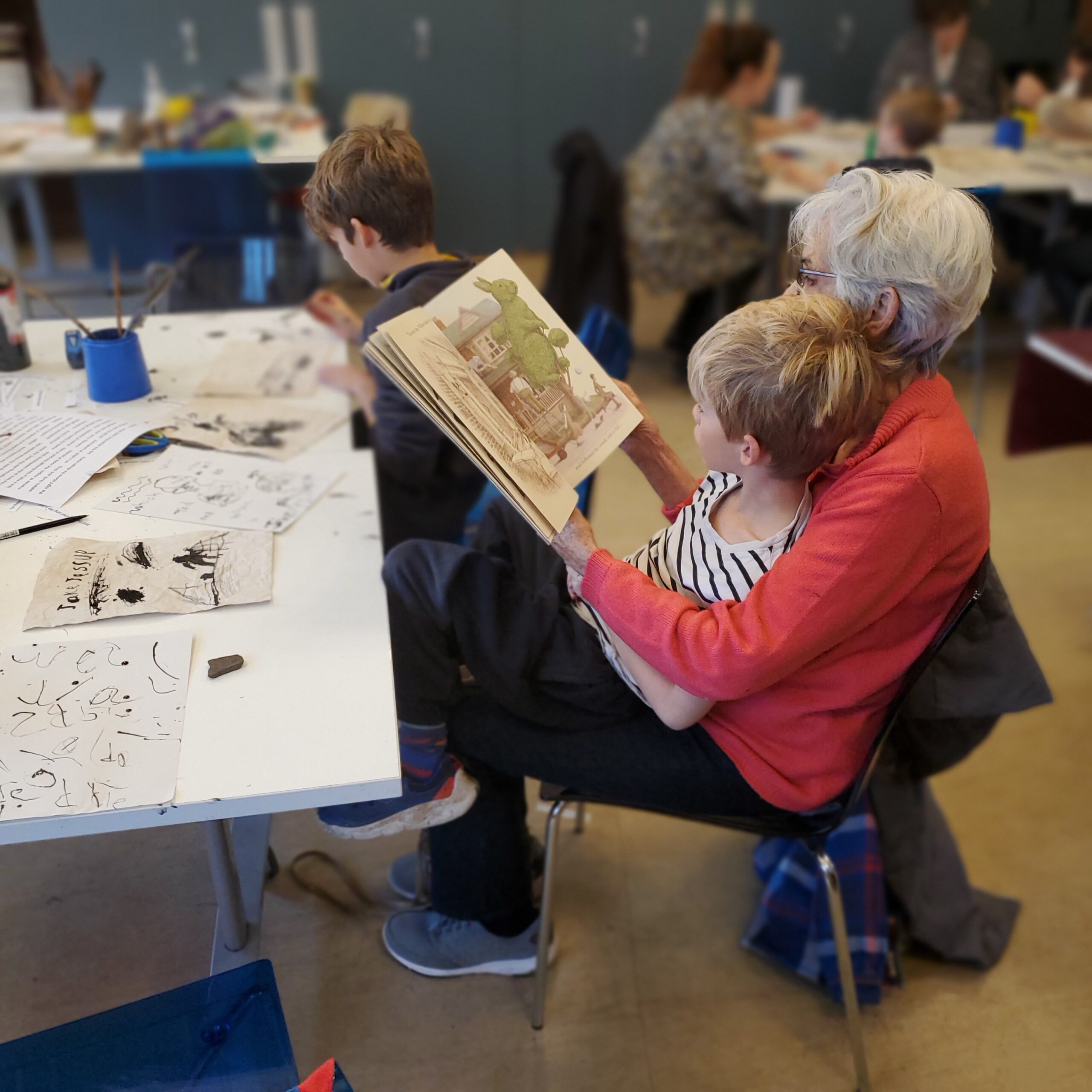
The Exhibition also supports a wide programme of engagement and participation. It has been shortlisted for the UK-wide Kids in Museums Family Friendly Museum Award in 2023, 2024 and 2025, recognising the quality and inclusiveness of its offer. Family activity is delivered throughout the year, particularly during school holidays, alongside sensory resources and Quiet Workshop sessions designed to support a broader range of visitors.
Developing writing as a living artform is a consistent thread of the Exhibition’s work. Through its long-running Young Writers Squad, free creative writing workshops are delivered for children and young people, led by professional writers. This activity supports emerging talent and reinforces writing as a foundational part of the wider creative economy.
The Exhibition also places strong emphasis on access, inclusion and co-production. Work with Your Voice Advocacy is helping to make interpretation and engagement more accessible to adults with learning disabilities. In summer 2025, the Exhibition was awarded Arts Centre of Sanctuary status by City of Sanctuary, recognising its creative work with people seeking sanctuary in Swansea and its commitment to culture as a civic practice.
Alongside this, the Exhibition continues to bridge heritage and contemporary voice. It holds the international legacy of Dylan Thomas while creating space for new writing, bilingual activity, spoken-word culture and contemporary interpretation. Its contribution to a Dylan Thomas feature on Antiques Roadshow reflects its ongoing visibility and relevance.
Together, the Dylan Thomas Centre and the Dylan Thomas Exhibition form a distinctive cultural asset for Swansea: a civic setting that houses a high-quality, inclusive and outward-facing cultural programme. They demonstrate how literary heritage can be actively interpreted, shared and developed, strengthening the city’s cultural identity while remaining rooted in place, people and practice.
"We share Dylan Thomas’ writing and context with communities through our interactive exhibition, and accessible, exciting learning and engagement activities. Visitors of all ages enjoy exploring the displays and joining in with workshops, and it’s always so exciting when participants show us the work they’ve been inspired to create themselves."
— Jo Furber, Literature Officer, Dylan Thomas Centre